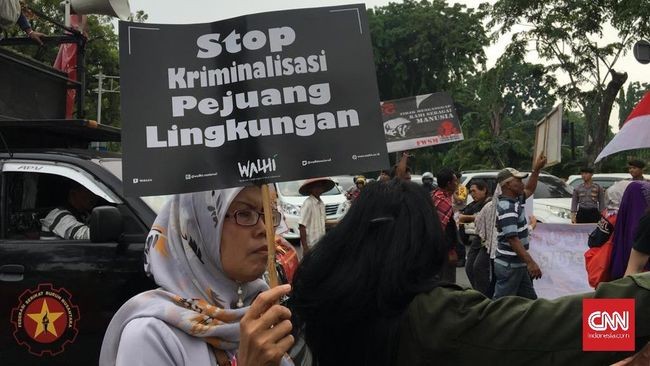
An hour before midnight on 23 July last year, in a house on East Jakarta’s Jalan Sarbini I, the sleepy stillness was shattered abruptly as a group of policemen burst into the house.
“Where’s Zenzi?” one officer demanded, his tone proving he was in no mood for dissent.
The named individual was aghast. Jumping to his feet, Zenzi Suhadi, an activist with the National Executive of the Indonesian Forum for the Environment (WALHI), tried, but failed to recognize any of them. A police officer, still young, approached stating his unit: Metro South Jakarta Police Narcotics Investigation Unit, and relaying their intention: to search Zenzi’s home for drugs. But the police were missing something: a search warrant; a legal guarantee ensuring a person’s rights over their home and preventing abuse of authority.
But Zenzi had little opportunity to debate a missing warrant. In seconds the police officers surrounded Zenzi in his reception room, one of them snatching the mobile phone from his hand, others storming upstairs without permission. Every room in the two-floor, Makassar ward house was ransacked.
The police ordered Zenzi to give a urine sample for a drugs test. Luckily he was able to do straight away; perhaps because of the police presence or maybe because it was the middle of the night.
Around 45 minutes later, the police left empty handed finding no evidence of drugs in Zenzi’s home. Zenzi’s urine test also came up negative.
For Zenzi, the ransacking was the culmination of events throughout July. Two weeks earlier, police had suddenly searched his car at the ferry crossing from Bakauheni port in Lampung to Merak in Banten, again on the pretext of looking for drugs. Also, his WhatsApp web had become inaccessible, with only coding appearing on the screen of his laptop.
He suspected all these occurrences were connected to his activities with WALHI frequently criticizing government policies exacerbating the climate crisis, destroying forests, and degrading ecosystems and the environment. Now the head of WALHI’s advocacy department, Zenzi once led protests against a lobster larvae export policy by Minister of Maritime Affairs and Fisheries, Edhy Prabowo, fearing the policy could eliminate the food source of a number of rare fish species. Edhy was recently arrested for alleged corruption surrounding the policy.
Zenzi was also active in rejecting No. 11/2020; the Omnibus Law on Job Creation, equating its one-size-fits-all rules to government blessing for cooperatives to become trade alliances similar to the VOC in Dutch colonial times. He also said provisions in the Omnibus Law accommodate company impunity to commit crimes in the context of environmental degradation. On these bases, Zenzi became active in the Omnibus Law opposition movement, deliberating the law article-by-article with a coalition of civil society organizations.
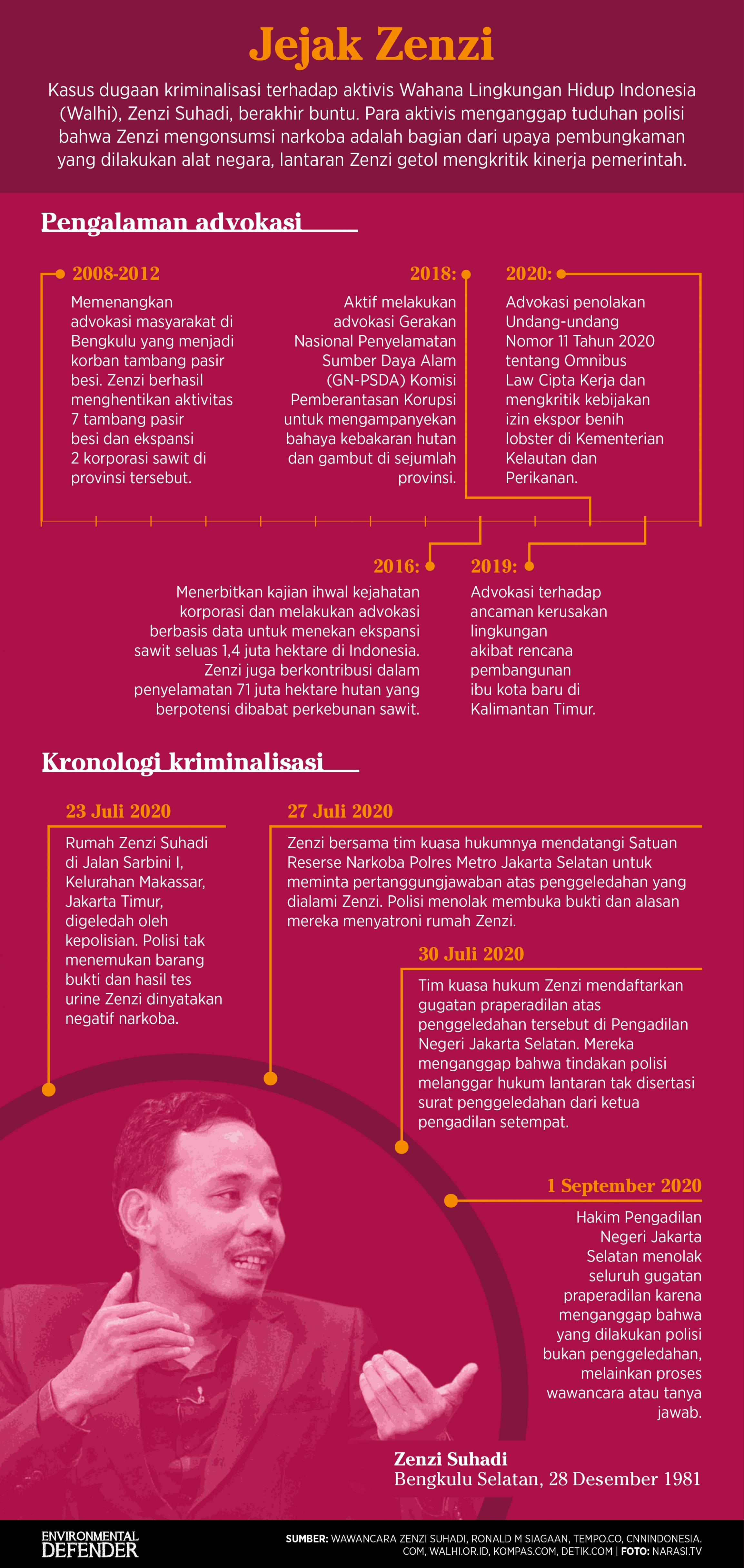
Plans to move the national capital city were another focus of his attention, saying President Joko Widodo’s policy had the potential to destroy forests in North Penajam Paser and Kutai Kartanegara districts in East Kalimantan. Moreover, the policy was made without public consultation. Zenzi mobilized his network in the WALHI East Kalimantan Regional Executive to oppose the plan.
So, for Zenzi, the drugs issue was merely a tool for the government to criminalize him. This suspicion was reinforced within a week of the incident at his home as two more WALHI activists experienced the same treatment. The two were Muhammad Al Amien, Director of WALHI South Sulawesi, and Yohana Tiko, Director of WALHI East Kalimantan.
Of course Zenzi and WALHI resisted. Zenzi’s legal team filed pre-trial complaints with the South Jakarta District Court over the search’s alleged disregard for procedures. The team’s aim was to prove criminalization through the state aparatus to silence criticism from environmental defender activists. However, Judge Fauziah Harahap dismissed the complaints, judging the police actions not to be a searches, but interviews to ascertain information.
Zenzi’s legal counsel, Ronald M Siahaan, also reported the case to the Ombudsman and the National Human Rights Commission so they could investigate allegations of abuse of police authority. They also reported the incident to the Police Headquarters Profession and Safeguards Division. However, at the time of writing, there has been no sign of follow up in the case of Zenzi’s criticisms being countered by accusations of drug use.